Creating an Industrial Scrap Management Plan That Works
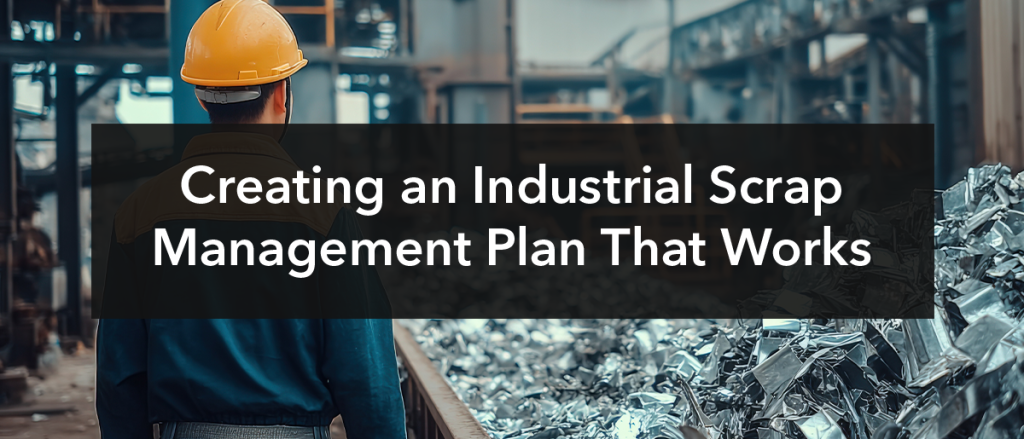
Many manufacturers treat scrap metal like waste, as something to be disposed of without a second thought. This carelessness can create unnecessary safety hazards for one, but it also means you’re leaving a potential revenue stream on the table! Instead of throwing the scrap away, you can develop a strategic scrap management plan that keeps your facility safe while supporting your bottom line.
The benefits of such a plan are more extensive than you might think. They can improve your facility’s safety scores, keep your floors OSHA-compliant and streamline your daily operations so that you and your teams can focus on what matters most. They also give you the option to sell relevant scrap to a scrap metal recycler in your area, which supports the environment and returns some of the scrap’s value to your pocket.
Creating an industrial scrap management plan that works doesn’t have to be hard, either! We’ll walk you through the process step by step so that you can make the most out of your facility’s industrial scrap.
How to Create an Industrial Scrap Management Plan
When creating a new scrap management plan, it’s important to approach things in phases. Trying to do everything at once will cause chaos and confusion for your teams working with the scrap at present. So, take your time and plan for a progressive rollout that gives your teams time to adjust.
Phase 1: The Scrap Audit
Start by assessing your existing scrap streams. There are a few key metrics that will help you calibrate all future phases.
Measuring your facility’s output volume and frequency will give you a clear sense of scale. You may be producing far more scrap far more often than you think, but you won’t know for sure without a precise measurement. These numbers will also give you a sense of the potential value of a more optimized scrap management plan.
Then, you need to identify exactly what types of metal scrap your facility is producing. Nonferrous metals can be quite valuable to scrap recyclers, so valuable that some people are willing to steal them. Ferrous metals are much more commonplace. The different types also need to be processed differently, so it’s important to identify them early so that they can be sorted.
You should estimate the daily and weekly bin fill rates at your facility. These rates will help you decide between small bins and larger roll-offs, which will help make your industrial waste planning more efficient.
Before wrapping up the audit, you should also identify maintenance waste, obsolete machinery and old racking systems that may be slowing or impeding your current scrap management processes. These areas of opportunity can then be addressed in later phases to create a more efficient and less costly scrap management process.
Phase 2: Sorting Strategy
Mixing ferrous and nonferrous scrap without distinction reduces the value of the entire load. This is why it’s so important to sort each type of metal scrap into separate bins at the point of generation. Many manufacturers use color-coded bins and clear labels to simplify sorting and make it easier to tell at a glance what is in each bin.
These sorting practices are at the heart of an efficient manufacturing scrap strategy. They keep the metals cleanly separated from one another and from wood, plastic and other waste. This doesn’t just save your team time, either. It also minimizes the risk of your scrap metal recycler rejecting a load while maximizing the value of the rebates they offer for the scrap.
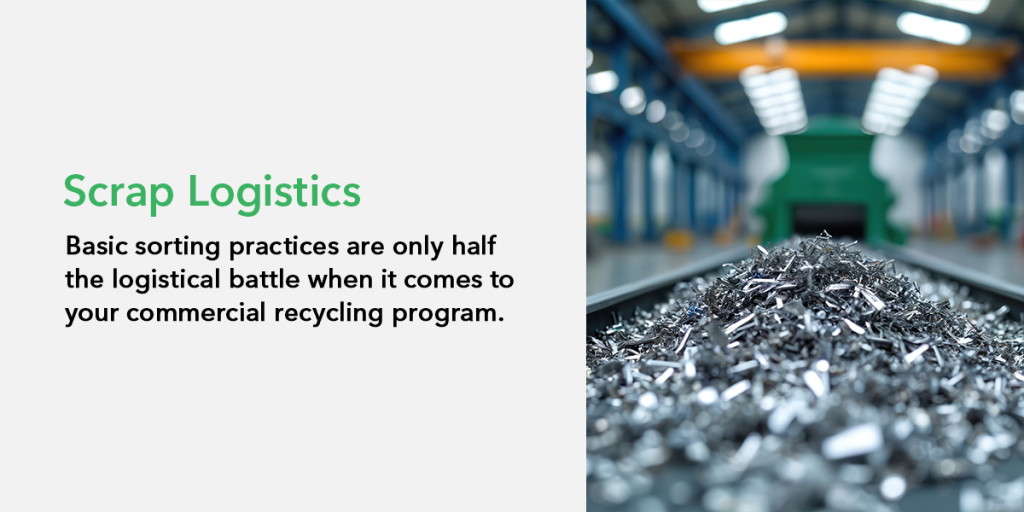
Phase 3: Scrap Logistics
Basic sorting practices are only half the logistical battle when it comes to your commercial recycling program. You also need to optimize the placement and size of your bins and how they’re used.
Bin placement is all about minimizing touch points and saving time. All scrap should be able to move directly from the line to its designated bin with minimal effort, which often means placing bins near loading docks or high-output zones. The bins also need to be positioned so that they don’t impede machines and employees as they move about the floor. Some manufacturers use brightly colored floor tape to designate bin areas so that they aren’t bumped into or accidentally impeded.
The size and number of your bins will be determined by the data you collected during your scrap audit. The daily/weekly volume of scrap your facility generates will help you choose between smaller Gaylord boxes and larger industrial roll-off containers. Some manufacturers may prefer self-dumping hopper containers, though, due to their speed and high level of compatibility with forklifts. Your scrap production rate will also help you decide how many containers you need.
Phase 4: Partner Selection
To get the most value out of your scrap and optimize your recycling process, you need a reliable partner who can handle your specific operation. They need a deep understanding of metal grades and market rates, and they must be able to scale with your output as it changes. These factors ensure that you receive a competitive rebate for your scrap and that your recycling processes remain efficient. A smaller scrap metal buyer may take too long to onboard your facility’s scrap, which can impede operations and increase costs.
A reliable partner will provide complete transparency through certified weight tickets and digital reporting. These tools ensure that everyone involved has a record of each scrap metal load and has been compensated properly. Some may even provide on-site storage and pickup services to allow your facility to save time and focus on its own work. This is typically how companies automate metal scrap removal — they sort scrap metal on-site and have their partner handle the rest.
Phase 5: Monitoring and Optimization
In the final phase of metal recycling implementation, you can step back and look for opportunities to optimize your process. There are typically three main ways to improve:
- Financial tracking: Monitor your scrap revenue streams to ensure you’re receiving fair market returns for the scrap you’re recycling. This will help you build a rapport with your recycling partner or find out if you need a new one.
- Operational agility: Your recycling process needs to be flexible. Production lines tend to change and expand as new tech and processes are added, so don’t get married to a single layout for your bins and dumpsters. Be willing to move them about to find more efficient layouts.
- Sustainability metrics: Accurately tracking the amount of recyclable scrap your facility produces can help you identify opportunities for improvement in sustainability. These metrics will also help your company gauge progress toward its environmental goals and landfill-reduction targets.
Partner With H&C Metals for All Your Scrap Management Needs
Since 1976, H&C Metals has been helping companies all around Newark improve their approach to business waste management. We don’t just offer trucking and dumpster services to make your processes more efficient. We also compensate you for ferrous and nonferrous metals, electronic scrap and more. Whatever your facility produces, we want to help you embrace sustainability and efficiency without having to compromise on your bottom line.
Fill out our contact form today or call 862-453-9763 to learn more!