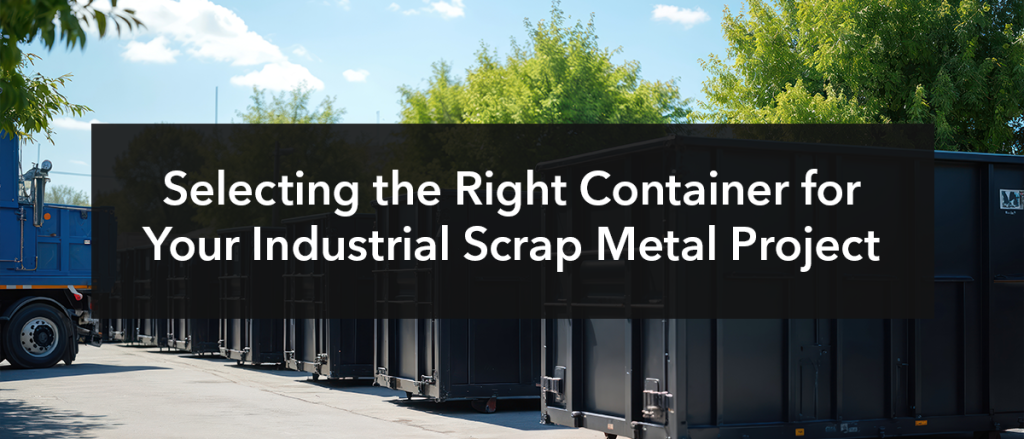
Selecting the Right Container for Your Industrial Scrap Metal Project
Choosing the right container for your industrial scrap metal project is complex. You have to think about the size of the scrap, the metal involved and the container’s total weight when filled. If you overlook these factors, the container and its contents can become a safety hazard or violate legal road weight limits. Pickups may even be rejected, which can halt production schedules, impede work and lead to unnecessary expenses.
Disposing of waste with industrial scrap containers should be a simple, seamless process that your project can rely on. If it isn’t, it’s possible your scrap isn’t being sorted into the right containers. Your manufacturing scrap may be too dense for the style of container you’re using. Or, maybe your construction scrap is simply too sharp to be transported safely in the container you’ve provided.
Whatever the problem, the best way to solve it is to build an understanding of the different container types and how they can fit into your worksite in a safe, efficient way.
Volume vs. Density
Many project managers chronically underestimate the weight of their scrap and fill containers up to the brim. This approach may seem intuitive, but unfortunately, size doesn’t equal weight. A full container could be thousands of pounds heavier than the legal truck weight limit. It could also be way heavier than the truck can handle on its own.
Understanding the distinction between density and volume is key to using your scrap containers correctly. The Environmental Protection Agency’s standard volume-to-weight conversion chart helps illustrate the difference. A single cubic yard of loose concrete can weigh almost a ton all by itself. If you completely fill a 15-yard container with loose concrete, chances are it will exceed your state’s truck weight limit. Copper scrap likely won’t pose the same issue.
So, before choosing and filling a container, it’s important to understand the density of the scrap you’ll be placing in it. This will help you decide between container types and avoid overfilling the one you choose.
How to Select the Right Container for Industrial Scrap
Choosing from the many metal recycling dumpster options out there can be challenging. To navigate your choices and find the best container for your project, follow these three steps:
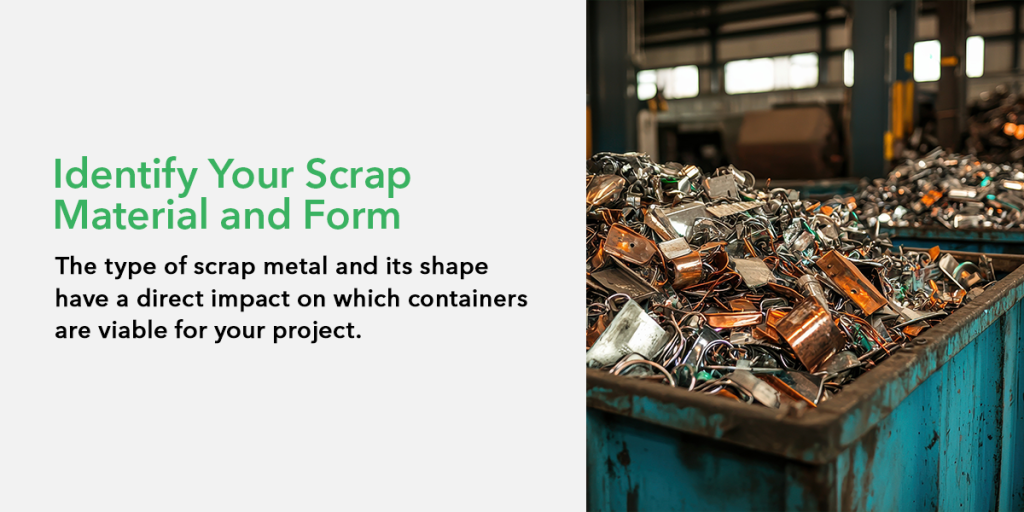
1. Identify Your Scrap Material and Form
The type of scrap metal and its shape have a direct impact on which containers are viable for your project.
For example, ferrous and nonferrous metals often require different containers due to their distinct properties. Scrap made of ferrous metals, such as steel frames and iron pipes, tends to be awkwardly shaped but lower in weight. The metals themselves also aren’t that valuable, so open-top roll-off containers are perfect. Nonferrous scrap metal, such as copper wire and die-cast zinc parts, needs enclosed containers to prevent theft. These metals have a higher value, so they need to be sealed off after the container has been loaded.
Bulky scrap naturally requires larger containers. This isn’t just because of its size. It’s also because machinery and uncut beams tend to create air pockets inside the container, empty spaces within the scrap that can’t be filled with other scrap. You’ll need containers with more square footage to account for these air pockets, and it may take more trips than usual to dispose of all the scrap.
Finer scrap, such as chips, turnings and borings, is best suited to containers with tight seals or liners. Without these features, your scrap may bounce out of its container during transit. If it does, you won’t be able to recycle it, and it may harm other vehicles.
2. Match Your Project to the Right Container Size
Once you’ve considered which type of container aligns with the scrap your project is producing, it’s time to think about size. In most cases, container size selection is about finding a balance between your project’s scale and the density of the scrap involved. You want to maximize the scrap the container can carry without exceeding the truck weight limit in your area.
There are four main size options:
- 10- to 15-yard containers: These compact containers are best suited to highly dense materials like concrete and steel. A larger container may be able to accommodate more of each material, but filling those containers to the brim will likely exceed the legal weight limit or overwhelm your truck’s hydraulic lift capacity. Smaller containers help you stay within those limits and ensure you get the most bang for your buck.
- 20- to 30-yard containers: These medium-sized containers are an all-around, flexible option for many different project types. They are the industry standard for facility cleanouts, midsized demolition projects and many others because they strike a balance between size and weight management. They’re large enough to accommodate bulkier scrap but small enough to minimize wasted space for heavier loads.
- 40-yard containers: Containers this long are primarily designed for high-volume, low-weight materials. They’re perfect for large-scale office cleanouts and other projects that produce a lot of lightweight materials. Since weight isn’t a concern for these projects, they can use longer containers to make scrap disposal more efficient.
- Specialty luggers and hoppers: Some worksites are too small for full-sized containers. In these cases, many project managers choose luggers or hoppers due to their compact, more rectangular design. Luggers are larger and typically moved by special lugger trucks, whereas hoppers can be moved by forklifts. Both are far more maneuverable than standard containers and are perfect for smaller jobs in more confined areas.
3. Consider Logistics and Site Accessibility
The final thing to consider is the makeup of the worksite itself. The container and the vehicle hauling it must be able to move through the space safely, without putting nearby structures, equipment or workers at risk. To get a sense of which containers can do this, consider the following:
- Truck clearance and footprint: Clearing 40 feet of space for a 40-foot container is not enough. There needs to be additional room so that your standard roll-off truck can safely back the container in and off-load it. The amount of space required varies based on the truck and the container, so be sure to clear a wide berth for both based on what you’re using.
- Surface integrity and protection: Construction waste containers tend to be quite heavy. If they’re placed on soft asphalt or mud, they can sink into the surface and damage it. They might even get stuck in some cases. If working on a sturdier surface isn’t an option, you’ll need to use plywood shielding or concrete pads to ensure a smooth operation.
- Security for high-value metals: Copper, brass and other nonferrous scrap metals are often stolen due to their high value. To prevent these thefts, some project managers will invest in locks and other forms of security to keep thieves out. The container can also be placed in a more secure or harder-to-reach area to deter thieves.
Once you’ve assessed the scrap, the containers and the site, you can make an informed decision about which container will suit your project best.
Partner With H&C Metals for All Your Scrap Disposal Needs
H&C Metals makes it easy to dispose of commercial and industrial scrap metal your way. Our scrap metal collection and removal services can streamline your disposal processes and let you focus on the project itself. We’ll even pay you for your recyclable materials.
For 50 years, we’ve been helping clients in and around Newark dispose of their scrap metal safely and responsibly. But don’t take our word for it — check out what our clients have to say!
Fill out our contact form today or call 973-587-2882 to learn more.